
Why Do Medical-Grade Hyperbaric Oxygen Therapy Treatments Use Hard Chambers Instead of Soft Chambers?
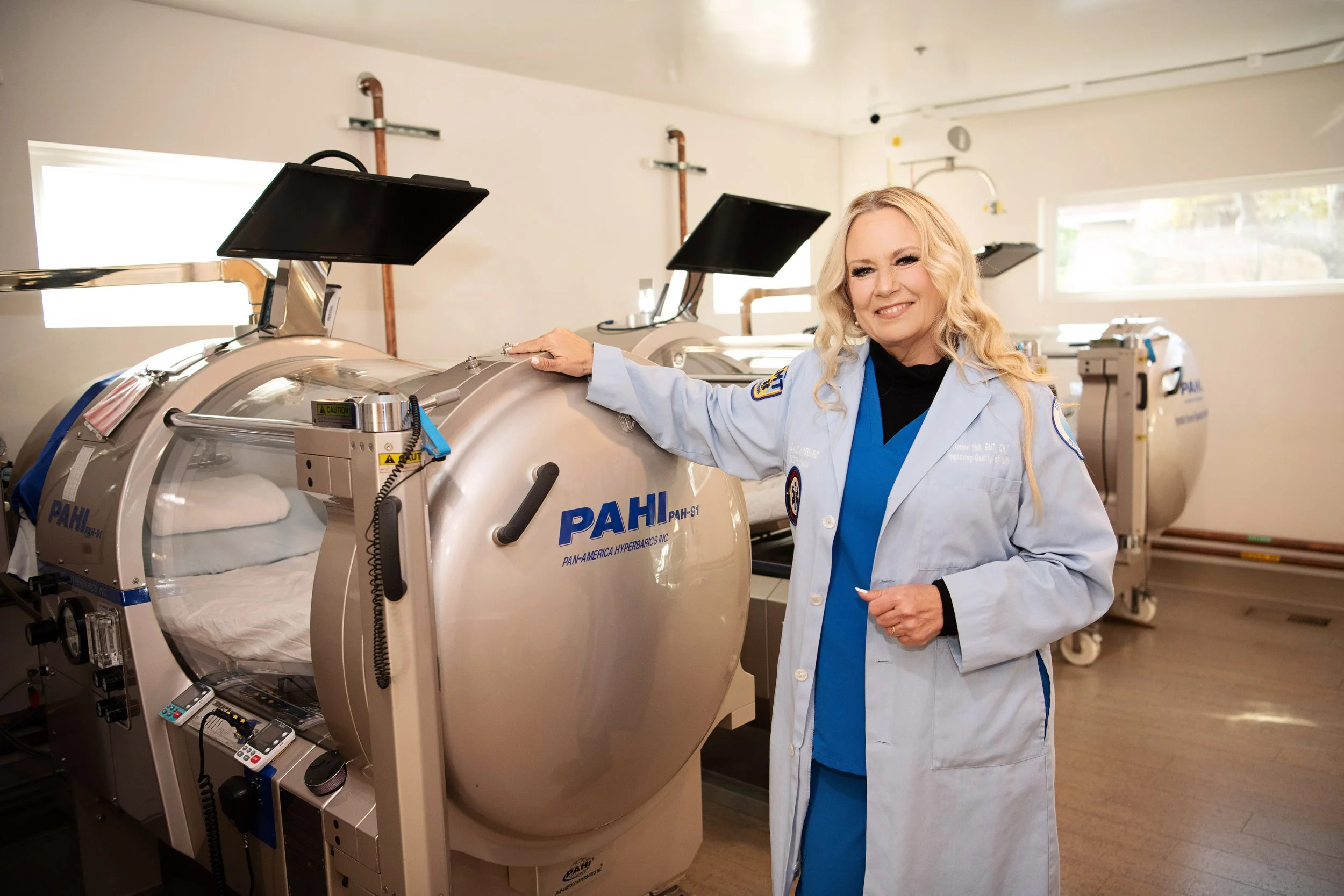
Patients researching Hyperbaric Oxygen Therapy (HBOT) often discover two different types of chambers: soft chambers marketed for wellness and hard chambers used in hospitals and accredited hyperbaric medicine centers. At first glance, both appear to offer the same treatment because each places a person inside a pressurized chamber. However, the medical science behind Hyperbaric Oxygen Therapy is more complex than chamber design alone.
Medical-grade HBOT is defined by a combination of carefully controlled pressure, 100% medical-grade oxygen, and standardized treatment protocols developed through decades of clinical research. These elements work together to produce physiological changes that support healing in specific medical conditions. Understanding why hospitals rely on hard chambers helps explain what distinguishes evidence-based Hyperbaric Oxygen Therapy from lower-pressure alternatives.
Hyperbaric Oxygen Therapy Is More Than Simply Breathing Oxygen
Many people assume that Hyperbaric Oxygen Therapy works because patients breathe extra oxygen. In reality, oxygen concentration is only one part of the treatment. The pressure inside the chamber is equally important because it changes how oxygen behaves inside the body.
Under normal conditions, oxygen is carried mainly by red blood cells. During medical-grade HBOT, increased atmospheric pressure allows a much larger amount of oxygen to dissolve directly into the blood plasma and allows it to travel up to four (4) times further than it normally would. Because plasma circulates throughout the body, this dissolved oxygen can reach tissues where circulation has been reduced by injury, inflammation, infection, or vascular disease.
This combination of increased pressure and pure oxygen creates physiological conditions that cannot be achieved through oxygen therapy alone.
What Defines Medical-Grade Hyperbaric Oxygen Therapy?
Medical-grade Hyperbaric Oxygen Therapy follows established treatment protocols used in hospitals and accredited hyperbaric medicine facilities. Several characteristics distinguish these treatments.
Patients receive 100% medical-grade oxygen rather than oxygen-enriched air.
Treatment is delivered inside rigid hard chambers capable of safely maintaining the proven patient pressures required for medical HBOT.
Every session follows carefully prescribed treatment pressures and durations determined by trained hyperbaric medicine professionals.
These standardized protocols are used for FDA-recognized indications such as decompression sickness, carbon monoxide poisoning, radiation tissue injury, chronic refractory osteomyelitis, certain non-healing diabetic foot ulcers, arterial gas embolism, and several other approved conditions. The goal is not simply to increase oxygen intake but to deliver a therapeutic oxygen dose that produces measurable biological effects throughout the body.
Why Pressure Plays Such an Important Role
Pressure is the defining feature of Hyperbaric Oxygen Therapy. As pressure increases inside a hard chamber, oxygen becomes more soluble within blood plasma according to well-established principles of gas physiology.
Higher dissolved oxygen levels allow oxygen to diffuse farther into tissues that may not receive adequate oxygen under normal circulation. Researchers have shown that improved tissue oxygenation supports several biological responses, including collagen production, angiogenesis (new blood vessel formation), immune cell function, and tissue repair.
These physiological mechanisms explain why pressure cannot be separated from oxygen when discussing medical-grade HBOT. Both components work together to create the therapeutic environment used in evidence-based hyperbaric medicine.
What Is a Soft Hyperbaric Chamber?
Soft hyperbaric chambers are constructed from flexible reinforced materials (including petrochemicals) and typically operate at lower pressures than medical hard chambers. Most are designed to provide mild increases in atmospheric pressure while patients breathe room air or oxygen supplied through a mask or concentrator.
Because these systems operate differently from medical-grade chambers, they are generally used in wellness or recovery settings rather than hospital-based hyperbaric medicine programs. Their portability, simpler installation requirements, and lower operating pressures make them more accessible, but they are not designed to reproduce the same treatment environment used for medically recognized HBOT protocols.
How Oxygen Delivery Differs Between Hard and Soft Chambers
The primary distinction between medical-grade hard chambers and soft chambers is not the chamber itself—it is the physiological oxygen dose delivered during treatment. Effective Hyperbaric Oxygen Therapy depends on both pressure and oxygen concentration working together.
Medical-grade hard chambers typically operate between 1.5 and 3.0 atmospheres absolute (ATA) while patients breathe 100% medical-grade oxygen. Under these conditions, arterial oxygen levels increase dramatically, allowing oxygen to dissolve directly into blood plasma at concentrations far beyond what is possible under normal atmospheric conditions. This dissolved oxygen can travel independently of red blood cells and reach tissues where circulation has been reduced by injury or disease.
Soft chambers generally operate at lower pressures, often around or below 1.3 ATA, and commonly rely on room air or oxygen supplied through a concentrator or mask. Although this increases oxygen exposure compared with normal atmospheric conditions, the amount of oxygen dissolved into plasma remains substantially lower than that achieved during medical-grade HBOT. This difference becomes important when treating medical conditions that depend on delivering a therapeutic oxygen dose to oxygen-deprived tissues.
Medical hyperbaric oxygen therapy for recognized conditions is not equivalent to low-pressure “mild” or “soft” hyperbaric exposure. The Undersea and Hyperbaric Medical Society defines clinical HBOT as physician-prescribed medical-grade oxygen delivered in a code-compliant, hard-sided chamber at 2.0 ATA or greater. Jain also reports that aerobic bacteria may be stimulated at lower oxygen pressures—approximately 0.6–1.3 ATA—and inhibited at higher pressures of at least 1.5 ATA. Therefore, soft chambers operating near 1.2–1.3 ATA with compressed air should not be represented as delivering the antimicrobial oxygen dose used in medical HBOT. (UHMS) They simply can not provide the same outcome and could potentially make patients with any type of infection, mold, or fungus issues worse.
Reference: Jain, K. K. (2017). “HBO Therapy in Infections.” In Textbook of Hyperbaric Medicine (6th ed.), pp. 155–169. Springer. DOI: 10.1007/978-3-319-47140-2_14.
Why Hospitals and Hyperbaric Medicine Centers Use Hard Chambers
Medical hyperbaric programs are designed to deliver standardized treatments supported by clinical research and established treatment guidelines. Hard chambers are used because they can safely maintain the pressures required for these evidence-based protocols while allowing physicians to accurately control every treatment session. Soft chambers cannot maintain the necessary pressures for most proven patient protocols as needed for the 14 medical indications as set forth by the FDA.
Depending on the facility, patients may receive treatment in monoplace or multiplace hard chambers. Larger multiplace chambers also allow trained medical personnel to remain with patients during treatment when continuous monitoring or specialized care is necessary.
The chamber itself is only one component of treatment. Equally important are physician direction, patient assessment, pressure selection, oxygen delivery and regulation systems, safety monitoring, NFPA requirements, EMT and CHT certifications, and adherence to established hyperbaric medicine protocols. These factors ensure that treatment is tailored to the patient's specific medical condition while maintaining a high standard of safety. Soft chambers do not address any of these required issues.
What These Differences Mean for Patients
Choosing between a soft chamber and a medical-grade hard chamber is not simply a matter of convenience or equipment preference. The appropriate choice depends on the medical condition being addressed, the physiological response required, and the treatment protocols supported by clinical evidence.
Medical-grade hard chamber HBOT has become the standard for approved medical indications because it combines specific treatment pressures, 100% medical-grade oxygen, standardized protocols, and physician program oversight to achieve measurable physiological effects that support healing. Soft chambers may serve different purposes, but they are not intended to reproduce the same medical treatment environment used in hospital-based hyperbaric medicine.
Understanding these differences allows patients to make informed healthcare decisions based on scientific evidence rather than marketing claims.
For readers who wish to explore the scientific evidence in greater depth, the following peer-reviewed clinical studies and published research articles provide additional insights into this topic.
Case study: https://www.mdpi.com/2076-3271/14/3/360
Summing Up:
At Advanced Hyperbaric Recovery Inc., patient education is an essential part of every treatment plan. Understanding how pressure, oxygen concentration, and physician-guided protocols work together helps patients recognize what defines true medical-grade Hyperbaric Oxygen Therapy. Our team follows established standards in hyperbaric medicine to provide individualized care based on each patient's diagnosis, treatment goals, and current clinical evidence.
If you are exploring hyperbaric oxygen treatment and would like to understand whether medical-grade Hyperbaric Oxygen Therapy is appropriate for your condition, our experienced clinical team is available to answer your questions and discuss your treatment options.
Contact Advanced Hyperbaric Recovery Inc. today to schedule a consultation and learn how evidence-based, medical-grade Hyperbaric Oxygen Therapy may support your personalized care plan.
Frequently Asked Questions:
-
Medical-grade hard chambers deliver 100% medical-grade oxygen at specific treatment pressures under physician direction, while soft chambers operate at lower pressures and serve different purposes.
-
Hospitals use hard chambers because they meet medical standards, safely achieve therapeutic pressures, and support FDA-recognized Hyperbaric Oxygen Therapy treatment protocols.
-
No. Medical HBOT depends on both increased pressure in a hard chamber and 100% medical-grade oxygen working together to raise dissolved oxygen levels in both the blood and plasma up to 4 times further into the body and supports specific physiological healing responses.
-
No. Soft chambers have limited approved uses (usually just High Altitude Sickness) and are not designed to deliver the same medical-grade treatment protocols used for FDA-recognized Hyperbaric Oxygen Therapy indications.
-
Patients should ask about chamber type (is it a hard chamber?), treatment pressure (All medical grade HBOT protocols start at 1.5 ATA or above that), oxygen source (must come from a 3rd party that can verify it is medical grade with a MSDS sheet), physician direction (can you speak to and see a physician there educated in Hyperbaric Medicine?), and whether therapy follows established medical Hyperbaric Oxygen Therapy guidelines.
