
Hyperbaric Oxygen Therapy After Surgery: What to Expect
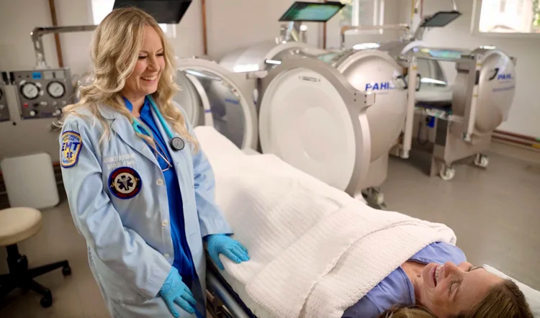
Most people hear about hyperbaric oxygen therapy and picture divers with decompression sickness. The reality is far broader and exciting! A growing number of informed post-surgical patients are now using the hyperbaric chamber after surgery to speed up wound healing, reduce the risk of infection, heal more completely and get their bodies back to baseline faster than standard recovery allows.
But does it actually work? And is it safe if you are already on medication? Those are fair questions, and the answers are more specific than most wellness content lets on.
Why Does the Surgical Wound Need More Oxygen in the First Place?
When a surgeon closes an incision, the tissue underneath is already running low on oxygen. Swelling compresses local blood vessels, circulation is disrupted, and the cells doing the repair work, specifically fibroblasts, neutrophils, and endothelial cells, are now competing for whatever oxygen is left.
The same source notes that neutrophil bacterial killing, your body's first-line defence against surgical site infections, operates through an oxygen-dependent respiratory burst. At a tissue oxygen pressure of zero, neutrophils kill only 37% of bacteria in the wound per hour. Raise that pressure to 30 mmHg and the killing rate jumps to 70%. These are not abstract numbers. They reflect exactly what is happening inside your body in the days after surgery.
So What Does the Hyperbaric Chamber Actually Do?
The physiological effects in a post-surgical context are specific:
Angiogenesis is stimulated - new capillaries form in oxygen-deprived tissue, restoring microvascular supply to the wound bed
Fibroblast activity increases - collagen is synthesised faster and with greater tensile strength when local tissue pO2 is elevated
Leucocyte bacterial killing is enhanced - the oxidative respiratory burst that neutrophils use to destroy bacteria is directly oxygen-dependent
Oedema is reduced - hyperoxia (or an increase of oxygen) causes vasoconstriction that limits swelling without compromising oxygen delivery, since plasma-dissolved O2 compensates and travels up to 4 times further into the tissues.
The study, titled "Stem cell mobilization by hyperbaric oxygen," was published in the American Journal of Physiology-Heart and Circulatory Physiology (Thom et al., 2006). The researchers evaluated both human subjects and animal models to track the movement of stem/progenitor cells (SPCs)—specifically tracking the CD34+ population, which are crucial for blood vessel formation and tissue architecture repair (Thom et al., 2006).
The trial revealed exactly how the timing and frequency of Hyperbaric Oxygen Therapy (HBOT) impact stem cell release:A Single Exposure: After just one 2-hour session of HBOT at 2.0 ATA (atmospheres absolute) breathing 100% oxygen, the population of circulating CD34+ stem cells in the bloodstream doubled (Thom et al., 2006).A Full Course (20 Treatments): As the treatments continued daily, the mobilization compounded. By the end of 20 treatments, the circulating stem cells demonstrated a dramatic eightfold increase (Thom et al., 2006).
Medicina (PMC, 2023) found that across multiple surgical contexts, HBOT consistently improved tissue oxygen tension, reduced wound dehiscence rates, and supported faster epithelialisation in hypoxic post-surgical wounds. The benefit was most pronounced in cases where standard tissue perfusion was already compromised, such as in radiated tissue beds or patients with peripheral vascular disease.
Will It Work for You? The Honest Answer
HBOT is not a universal post-surgical upgrade. The clinical evidence supports its use most strongly in specific categories:
Wounds in previously irradiated tissue, where vasculature is already scarred and oxygen delivery is chronically limited
Compromised skin grafts and surgical flaps where marginal perfusion puts the graft at risk of failure
Diabetic patients with post-surgical foot or lower limb wounds, given the underlying microvascular disease
Surgical site infections involving anaerobic bacteria, which are directly inhibited by elevated tissue oxygen
For straightforward elective surgeries in otherwise healthy patients, the picture is more nuanced. HBOT does not accelerate healing in tissue that is already healing normally, but instead tissues are healed more completely. The therapy is most clinically meaningful where tissue oxygenation is already below the minimum threshold for effective repair. The gap it fills is substantial.
What If You Are Already on Medication?
This is where HBOT requires more than a casual conversation with a Nationally Certified Hyperbaric Technologist or Hyperbaric Physician. Oxygen at elevated pressure behaves like a drug with its own interactions, and some existing medications create a problem when combined with a hyperbaric environment. Some medications also block the uptake of oxygen to the cells.
The most significant are:
Bleomycin (chemotherapy)
Doxorubicin (chemotherapy
Cisplatin (chemotherapy):
Disulfiram (used in alcohol dependence):
Beyond these specific agents, anyone on corticosteroids, anticoagulants, or insulin needs their protocol reviewed by a hyperbaric physician before starting treatment. Insulin requirements, for instance, can shift during a course of HBOT sessions because improved tissue oxygenation affects glucose metabolism.
An untreated pneumothorax is the one absolute contraindication. No HBOT, under any circumstances, until it is fully resolved. Every other concern is evaluated on a case-by-case basis by a qualified physician, that is why it is imperative that wherever you go for hyperbaric oxygen therapy you meet with an actual physician trained in hyperbaric medicine..
Ready to Find Out If HBOT Fits Your Recovery?
Not every patient needs it. But for those who do, the difference between a wound that stalls(creating ongoing suffering an disability) and one that heals can come down to something as precise as tissue pO2.
Talk to a hyperbaric physician about your surgical recovery. Call Advanced Hyperbaric Recovery at (415) 785-8652 or visit HyperbaricOxygenTherapy.com to schedule a consultation.
Optimize your surgical recovery plan with medical-grade hyperbaric oxygen therapy. Reserve your session now.
References:
Case Study 1:The Role of Hyperbaric Oxygen Therapy in the Treatment of Surgical Site Infections: A Narrative Review - PMC
Case Study 2:https://journals.sagepub.com/doi/full/10.1089/fpsam.2024.0012
Case Study 3:https://www.sciencedirect.com/science/article/abs/pii/S0002961024006627
Frequently Asked Questions
-
Description text goes hTiming depends on your wound status, surgical type, and whether there are any immediate contraindications such as an untreated pneumothorax or active use of bleomycin. In some cases, HBOT starts within days of surgery under physician supervision. In others, a short waiting period is required. There is no universal answer, which is why the first step at Advanced Hyperbaric Recovery is always a physician evaluation rather than a booking form.ere
-
Clinical protocols for post-surgical wound healing typically range from 10 to 40 sessions, each lasting around 110 minutes or 90 minutes at depth. The exact number depends on wound response, tissue oxygen measurements taken during the course of treatment, and how quickly the wound bed is progressing. Your physician will adjust the protocol based on objective TCOM readings throughout, not just a fixed pre-set number.
-
For most standard antibiotics, no significant interaction with HBOT exists. In fact, hyperoxia and antibiotics are synergistic for wound infection: research shows that combining early antibiotic administration with elevated tissue oxygen results in more efficient bacterial clearance than either approach alone. The exception is the sulfonamide class of antibiotics, which carries a relative caution in hyperbaric settings. Disclose every medication, including over-the-counter supplements, during your intake evaluation.
-
Yes, and this is actually one of the stronger evidence-based indications for post-surgical HBOT. Compromised grafts and surgical flaps fail primarily because of insufficient tissue oxygen at the margins. Hyperbaric oxygen raises perfusion pressure in the periwound tissue and stimulates new capillary formation, giving the graft bed a better chance of integrating. Many insurance Companies will pay for hyperbaric oxygen therapy for skin flap and skin graft survival.
N:B: The information provided here is intended for educational purposes only and does not constitute a medical recommendation. Please consult with a qualified hyperbaric physician at Advanced Hyperbaric Recovery for a personalized medical evaluation.
