
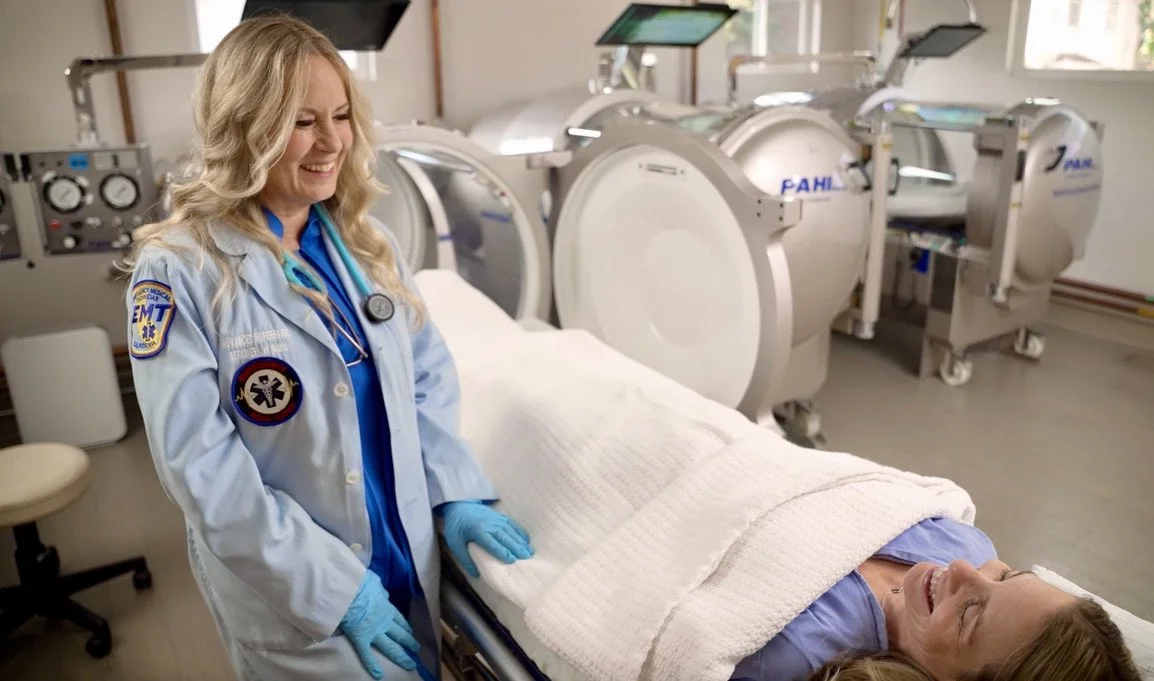
National Healthy Skin Month highlights the importance of keeping skin healthy and supporting its ability to repair damage. Skin protects the body from infection, helps regulate temperature, and provides a barrier against the outside environment. Injuries, surgery, burns, radiation-related tissue changes, and chronic wounds can damage this protective layer and make healing more difficult. Skin grafts and tissue flaps help repair damaged areas, while specialized wound care supports recovery when the skin does not heal as expected.
Hyperbaric oxygen therapy (HBOT) is an adjunctive treatment used to support tissue healing. During treatment, patients breathe 100% medical-grade oxygen inside a slightly pressurized chamber. This increases the amount of oxygen dissolved in the blood and helps deliver oxygen to tissues up to four (4) times further and deeper than they need it for repair. For appropriate patients, hyperbaric oxygen therapy can form part of a broader treatment plan for compromised skin grafts, tissue flaps, and complex wounds.
Why Skin Grafts, Tissue Flaps, and Persistent Wounds Need Special Care
A skin graft involves moving healthy skin from one part of the body to cover a damaged area somewhere else. A tissue flap transfers skin and, depending on the procedure, underlying tissue with its own blood supply. Surgeons use these techniques to repair injuries, reconstruct areas after cancer treatment, treat burns, and close wounds that cannot heal through routine care alone.
Successful healing depends on adequate blood flow, oxygen delivery, and the body's ability to repair damaged tissue. After surgery, a graft must connect with its new blood supply, while a flap needs sufficient circulation to remain healthy. Persistent wounds also require oxygen to support collagen formation, increased stem cell production, immune function, infection control, and the development of new blood vessels. Treatments that improve oxygen availability can contribute to recovery when a qualified medical team determines that they are appropriate.
How Hyperbaric Oxygen Therapy Supports Tissue Repair
Oxygen plays an important role in several stages of wound healing. It supports the activity of cells involved in tissue repair, helps the body produce collagen, and contributes to the formation of new blood vessels. Collagen provides structural strength to healing tissue, while new blood vessels help supply oxygen and nutrients to the affected area.
During hyperbaric oxygen therapy, increased pressure allows more oxygen to dissolve in the blood plasma. This improves oxygen delivery to tissues, including areas where circulation is impaired. Better oxygen availability supports the biological processes involved in repair and helps create conditions that encourage tissue recovery. For patients with compromised grafts or flaps, clinicians may include this treatment alongside appropriate surgical care, wound management, and other therapies.
How Oxygen Supports Collagen Formation and New Blood Vessel Growth
Collagen is a key building material for healing skin. It helps provide strength and structure as the body repairs damaged tissue. Cells involved in collagen production rely on oxygen to carry out important steps in this process. Adequate oxygen availability therefore contributes to the formation and organization of the tissue needed to close wounds and strengthen repaired areas.
What Research Shows About Skin Flap Survival
Research has examined the role of hyperbaric oxygen therapy in supporting skin flap survival after reconstructive procedures. A meta-analysis published from studies identified through June 26, 2023, included 13 randomized controlled trials involving 1,226 patients. The researchers reported that hyperbaric oxygen therapy was associated with improved flap survival compared with control treatment.
The analysis reported an odds ratio of 8.57 for flap survival, with a 95% confidence interval of 5.54 to 13.26. It also found higher skin blood oxygen saturation, higher postoperative skin temperature, shorter swelling resolution time, and a shorter time for the skin to become ruddy. These findings support the clinical interest in hyperbaric oxygen therapy as an adjunct for improving tissue conditions after flap surgery. Treatment decisions remain individualized according to the type of reconstruction, tissue condition, and the patient's overall medical needs.
How Hyperbaric Oxygen Therapy Supports Skin Graft Integration
After a skin graft is placed, the transferred skin needs to establish a connection with the recipient area and receive enough oxygen and nutrients to survive. During the early stages of healing, oxygen availability is important as the graft attaches to the underlying tissue and begins to develop a functional blood supply. Good surgical technique, careful wound management, and appropriate postoperative monitoring remain essential parts of this process.
Hyperbaric oxygen therapy can increase oxygen availability in tissues and support the biological activities involved in graft integration. For compromised grafts, this approach can be considered as part of a coordinated treatment plan to support tissue recovery. The goal is to help preserve the transferred tissue, encourage healing, and support the overall reconstructive outcome. The treating medical team determines whether hyperbaric oxygen therapy is suitable based on the graft's condition and the patient's clinical needs.
Case Study 1: Skin Grafting With Dermal Substitutes and HBOT
A clinical case series conducted between June and December 2022 examined the combined use of dermal substitutes, skin grafts, and hyperbaric oxygen therapy in 10 patients with soft-tissue defects. The cases included lower-leg wounds, defects following trauma, chronic ulcers, reconstruction after burn contracture release, and a soft-tissue defect associated with sternal wound dehiscence following radiation treatment.
All 10 patients received six hyperbaric oxygen sessions alongside their reconstructive treatment. The researchers reported successful wound healing in every patient, without complications. The findings describe encouraging outcomes in patients who received a combined approach involving reconstruction and hyperbaric oxygen therapy. They also illustrate how clinicians can incorporate hyperbaric oxygen therapy into individualized care plans for complex wounds.
Review more clinical evidence examining hyperbaric oxygen therapy and its potential role in supporting tissue recovery.
Case Study 2: https://www.magonlinelibrary.com/doi/abs/10.12968/jowc.2023.0206
The Role of Hyperbaric Oxygen Therapy in Complex Wound Reconstruction
Complex wounds can develop after severe injuries, burns, surgical complications, or radiation-related tissue damage. These wounds can affect several layers of tissue and require coordinated treatment to restore coverage and support healing. Depending on the wound, care can involve surgical reconstruction, a dermal substitute, a skin graft, a tissue flap, specialized dressings, and treatment of any underlying conditions that interfere with recovery.
Hyperbaric oxygen therapy can be included in the care plan when improved tissue oxygenation is an important clinical goal. By increasing oxygen availability, it supports the cellular processes involved in wound repair and helps create favorable conditions for recovery. The 2022 case series described above reported successful healing in 10 patients treated with dermal substitutes, skin grafting, and six hyperbaric oxygen sessions. These results provide a clinical example of how multidisciplinary treatment can address challenging soft-tissue defects.
Supporting Persistent Wounds Through Individualized Care
Persistent wounds often need more than routine dressings. Diabetes, circulation problems, pressure, infection, and previous radiation treatment can interfere with the normal healing process. A comprehensive assessment helps clinicians identify these factors and develop a treatment plan that addresses the wound's underlying causes as well as its visible symptoms.
Hyperbaric oxygen therapy can be considered for appropriate patients as one part of this wider approach. Treatment planning may involve wound assessment, infection management, pressure relief, circulation evaluation, nutritional support, and specialist review. For patients with qualifying wounds or compromised grafts and flaps, the medical team considers the likely benefits of hyperbaric oxygen therapy alongside the patient's overall condition and other treatment needs. Regular monitoring helps clinicians assess progress and adjust care as healing develops.
Closing Thoughts:
Healthy skin is important for protection, comfort, and everyday function. For people recovering from complex wounds, surgery, burns, or compromised skin grafts and tissue flaps, a carefully planned treatment approach can help support the body's repair processes. Hyperbaric oxygen therapy offers an additional option for patients when prescribed as part of appropriate medical care. Advanced Hyperbaric Recovery Inc. is a physician-directed outpatient hyperbaric oxygen therapy center in San Rafael, California, serving all of the San Francisco Bay Area. The center provides treatment in hard-shell medical-grade HBOT chambers using 100% medical-grade oxygen under slight pressure. AHRI focuses on individualized, medically guided care for patients whose conditions can benefit from hyperbaric oxygen therapy. Patients considering treatment for a persistent wound, compromised graft, or tissue flap should consult a qualified healthcare professional to determine whether it fits their clinical needs. Advanced Hyperbaric Recovery Inc.'s approach emphasizes informed treatment planning, professional oversight, and support for patients throughout their recovery.
Frequently Asked Questions:
-
Hyperbaric oxygen therapy increases oxygen availability in tissues, supporting a reduction in inflammation, cellular repair, collagen formation, new blood vessel growth, and healing processes in selected patients.
-
It can be considered for compromised skin grafts because increased oxygen availability supports tissue repair and graft recovery as part of a coordinated medical treatment plan.
-
Oxygen supports cellular activity, collagen production, and tissue repair. Adequate oxygen delivery is important for maintaining tissue health and supporting recovery after reconstructive surgery.
-
A meta-analysis of 13 randomized controlled trials involving 1,226 patients reported improved flap survival and better tissue oxygenation measures with hyperbaric oxygen therapy.
-
A qualified physician and healthcare professional evaluates the wound, circulation, medical history, and treatment needs to determine whether hyperbaric oxygen therapy is an appropriate adjunct.
