
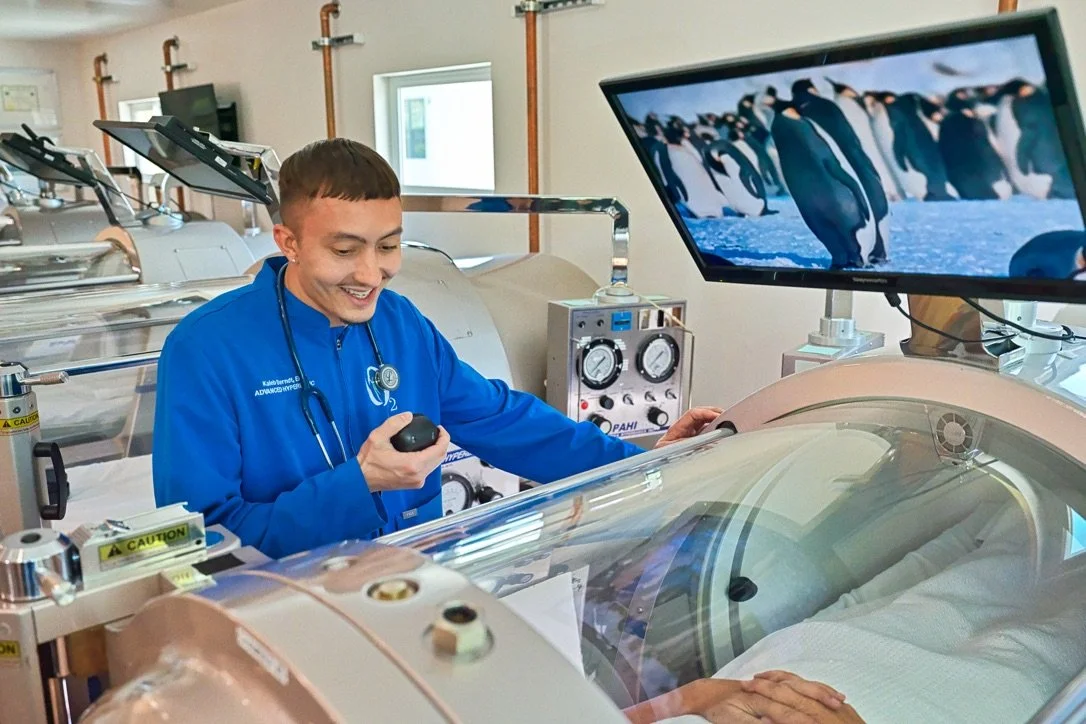
American Diabetes Month highlights the importance of preventing diabetes-related complications and protecting long-term health. One important area of care is diabetic foot health, especially for people affected by peripheral vascular disease (PVD) and diabetic neuropathy. These conditions can reduce circulation, affect sensation, and make wounds harder to heal. Hyperbaric oxygen therapy (HBOT) supports wound healing by increasing oxygen availability to body tissues under pressure. Clinical research, including a randomized controlled trial involving people with chronic diabetic foot ulcers, has examined its role in helping selected wounds heal.
How Diabetes Affects Blood Flow and Nerve Function
Diabetes can affect both the blood vessels and nerves that keep the feet healthy. Over time, high blood glucose can damage nerves and contribute to changes in circulation. These complications can occur together, increasing the risk of skin damage and persistent foot ulcers.
Peripheral vascular disease affects blood vessels outside the heart and brain. Peripheral artery disease (PAD), a common form of PVD, develops when narrowed arteries restrict blood flow to the legs and feet. Reduced circulation limits the delivery of oxygen and nutrients that skin and underlying tissues need for repair.
Diabetic neuropathy involves nerve damage associated with diabetes. It can reduce the ability to feel pain, heat, cold, or pressure. A blister caused by tight footwear or a small cut under the foot can therefore go unnoticed. Continued walking puts pressure on the injured area, increasing the risk of a deeper wound.
When poor circulation and nerve damage occur together, the feet need careful monitoring and timely medical attention.
Why Diabetic Foot Ulcers Need Special Attention
A diabetic foot ulcer is an open wound that develops when the skin and underlying tissue break down. Ulcers often occur under the toes, the ball of the foot, or the heel, where repeated pressure can damage the skin.
Several factors influence how well an ulcer heals. Blood flow affects oxygen delivery, nerve damage can allow repeated injury, and elevated blood glucose can interfere with normal body functions. Infection can further complicate the wound.
A comprehensive treatment plan addresses these factors. Depending on the patient's needs, care includes wound assessment, debridement to remove unhealthy tissue, suitable dressings, pressure offloading, blood glucose management, circulation assessment, and infection treatment when indicated. Early evaluation helps clinicians identify the wound's causes and select appropriate care.
How Hyperbaric Oxygen Therapy Supports Wound Repair
Hyperbaric oxygen therapy (HBOT) involves breathing 100% medical-grade oxygen inside a slightly pressurized hard HBOT chamber. The increased pressure allows more oxygen to dissolve in the blood plasma, and for it to travel up to 4 times farther and deeper into the soft tissue, improving oxygen availability throughout the body and helping deliver additional oxygen to tissues.
Oxygen has several important roles in wound repair. It supports fibroblasts, cells involved in producing collagen and rebuilding tissue. Collagen provides a framework for new tissue formation and helps strengthen the healing wound. Oxygen also contributes to angiogenesis, the development of new blood vessels that supply tissues.
Another important role involves certain immune cells that use oxygen-dependent processes to respond to bacteria in wounds. Adequate tissue oxygenation supports these functions as part of the body's infection-fighting process.
For selected diabetic foot ulcers, hyperbaric oxygen therapy adds a targeted approach to wound management. The treatment is planned around the patient's condition and works alongside the wound-care measures needed to relieve pressure, manage infection, and address circulation.
What Clinical Research Shows About Hyperbaric Oxygen Therapy
Research has examined hyperbaric oxygen therapy in people with long-lasting diabetic foot ulcers, including patients whose wounds had remained open for several months.
Case Study 1: The HODFU Randomized Controlled Trial
The Hyperbaric Oxygen Therapy in Diabetics with Chronic Foot Ulcers (HODFU) study was a randomized, single-center, double-blinded, placebo-controlled clinical trial. Researchers evaluated 94 patients with diabetes who had Wagner grade 2, 3, or 4 foot ulcers that had persisted for more than three months.
The treatment group received hyperbaric oxygen therapy (HBOT) in a multiplace chamber, while the comparison group received hyperbaric air. Treatment was delivered for 85 minutes daily, with a total session duration of 95 minutes, five days a week for eight weeks. The planned course included 40 sessions.
At one-year follow-up, complete healing of the original ulcer was recorded in 25 of 48 patients in the hyperbaric oxygen therapy group, representing 52%, compared with 12 of 42 patients in the placebo group, representing 29%. The difference was statistically significant (P = 0.03).
Among patients who completed more than 35 treatment sessions, complete healing occurred in 23 of 38 patients (61%) in the treatment group and 10 of 37 patients (27%) in the placebo group. The researchers reported a low frequency of adverse events.
The HODFU findings demonstrate that hyperbaric oxygen therapy improved complete healing rates in this selected group of patients with chronic diabetic foot ulcers. The study also highlights the importance of an appropriately planned treatment course.
Review these additional case studies to understand how hyperbaric oxygen therapy has been used in patient care.
Case Study 2: https://pubmed.ncbi.nlm.nih.gov/38064614/
In one randomized clinical study, 78% of patients with diabetic foot ulcers who received HBOT in addition to standard wound care achieved complete healing without surgical intervention.
Another clinical study involving 248 patients with difficult-to-heal wounds reported that 81% of wounds were completely or nearly completely healed following adjunctive HBOT, despite many wounds having been present for months or even years.
What Happens During a Hyperbaric Oxygen Therapy Session?
During hyperbaric oxygen therapy, the patient enters a slightly pressurized chamber and breathes 100% medical-grade oxygen. As the pressure increases, more oxygen dissolves into the blood plasma, making additional oxygen available to tissues throughout the body. The clinical team determines the treatment pressure and session duration according to the prescribed protocol.
Patients remain under supervision 100% of the time during treatment. As chamber pressure changes, some people notice fullness in their ears, similar to the sensation experienced during an airplane's descent. The care team explains how to manage this pressure and monitors the patient throughout the session. Treatment planning also includes reviewing medical history, medications, and conditions that could affect safety.
For people with chronic diabetic foot ulcers, hyperbaric oxygen therapy (HBOT) is delivered as a planned course rather than a single isolated session. The treatment team evaluates wound progress to determine how the patient is responding.
Why Wound Monitoring Matters During Treatment
Tracking wound changes helps clinicians understand whether a diabetic foot ulcer is progressing toward healing. At follow-up appointments, the care team can assess the wound's length, width, depth, tissue condition, and surrounding skin. Drainage, signs of infection, and changes in the wound bed also provide useful information about its condition.
This monitoring is particularly important for people with PVD and neuropathy. Reduced circulation can affect tissue recovery, while diminished sensation can allow repeated pressure or injury without the patient noticing. Reviewing the wound regularly helps the healthcare team identify problems and adjust the treatment plan when necessary.
Hyperbaric oxygen therapy is one part of this broader process. Consistent pressure relief, appropriate dressings, blood glucose management, and circulation care remain important throughout recovery. Coordinating these measures allows the care team to assess progress in the context of the patient's overall treatment.
Hyperbaric Oxygen Therapy: Powerful Support for Difficult-to-Heal Wounds
Chronic wounds are often characterized by inadequate tissue oxygenation, impaired circulation, and a diminished ability to repair damaged tissue. Hyperbaric oxygen therapy (HBOT) substantially increases the amount of oxygen available to compromised tissues, supporting several processes necessary for wound repair.
In one randomized clinical study, 78% of patients with diabetic foot ulcers who received HBOT in addition to standard wound care achieved complete healing without surgical intervention.
Another clinical study involving 248 patients with difficult-to-heal wounds reported that 81% of wounds were completely or nearly completely healed following adjunctive HBOT, despite many wounds having been present for months or even years.
HBOT does not replace excellent wound care. Rather, in appropriately selected patients, it can provide the oxygen-rich environment compromised tissue needs to support angiogenesis, collagen formation, immune function, and the body's natural wound-repair processes.
More oxygen. More support for healing.
How Hyperbaric Oxygen Therapy Fits Into Long-Term Diabetes Care
Healing a diabetic foot ulcer is only one part of protecting foot health. People with diabetes also need ongoing care to reduce the risk of another wound. Neuropathy can make it difficult to recognize repeated pressure, and circulation problems can increase the consequences of even a small injury.
Closing Note:
Diabetic foot ulcers need timely care that addresses the wound and the conditions contributing to delayed healing. Clinical research shows that hyperbaric oxygen therapy (HBOT) helps improve healing outcomes in patients, and research continues to examine its role in diabetes-related complications. Advanced Hyperbaric Recovery Inc. is an award-winning, physician-directed outpatient hyperbaric oxygen therapy center in San Rafael, California, serving all of the San Francisco Bay Area. Its facility combines specialized hyperbaric care with a commitment to environmentally conscious healthcare. With hard-shell chambers that deliver 100% medical-grade oxygen under pressure, Advanced Hyperbaric Recovery Inc. provides a setting where patients with chronic diabetic foot ulcers can discuss their treatment needs with an experienced care team. Contact Advanced Hyperbaric Recovery Inc. to learn more about the facility and arrange a comprehensive consultation with one of our physicians about whether hyperbaric oxygen therapy is appropriate for your care plan.
Frequently Asked Questions:
-
Diabetes can damage nerves and blood vessels, reducing foot sensation and circulation. Small injuries may go unnoticed, while reduced blood flow can slow wound healing.
-
Hyperbaric oxygen therapy delivers 100% medical-grade oxygen under slight pressure, increasing oxygen availability to tissues (up to four (4) times further and deeper into soft tissues and supporting collagen formation, new blood vessel development, and wound repair.
-
The HODFU trial reported complete ulcer healing in 52% of the treatment group compared with 29% of the placebo group at one-year follow-up.
-
A study of 90 patients reported improved nerve conduction and limb blood-flow measurements with hyperbaric oxygen therapy alongside standard care.
-
Care can include wound cleaning, debridement, pressure offloading, blood glucose management, circulation assessment, suitable dressings, and infection treatment when clinically indicated.
